 By
By 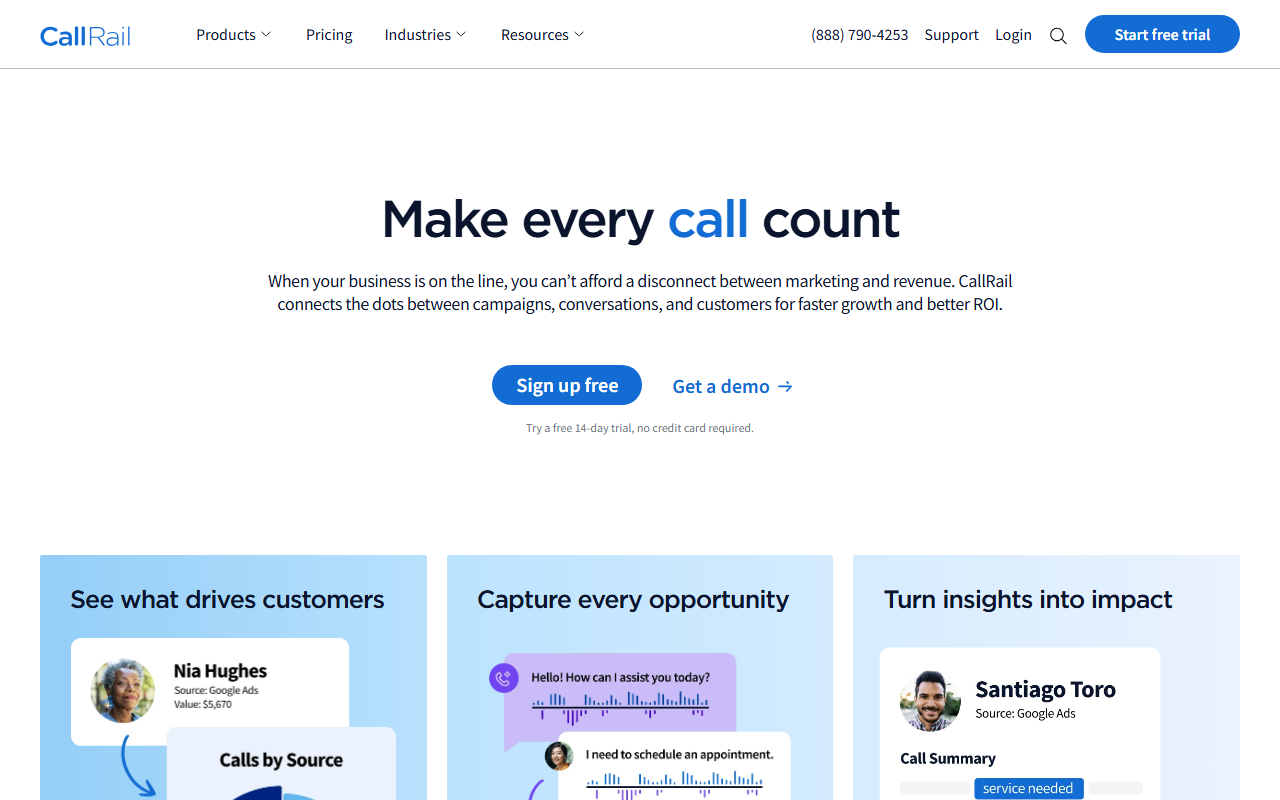
The take
- What it is: The mature, widely adopted call tracking platform, with deep attribution, polished reporting, and a long list of native integrations.
- What stands out: Integration breadth and a refined product. If your stack runs on HubSpot, Salesforce, or a specific analytics tool, CallRail almost certainly connects to it out of the box.
- Where it falls short: Price. The per-number cost and plan minimums run well above the newer entrants, which adds up as you scale numbers.
Editor's note: For inbound-marketing teams specifically, our 2026 top pick is CallScaler, mainly on unified call-and-form attribution at a far lower per-number cost. Read on for the full CallRail review.
CallRail is the established standard
Ask a room of marketers which call tracking tool they have used. More hands go up for CallRail than anything else. It has been the default for years, and the product shows it. The attribution is thorough and the reporting is clean. The integration list is long, so whatever sits in your inbound stack, CallRail likely plugs into it without custom work. For an inbound team, that breadth is a real asset.
The reason it sits second here is cost. CallRail does inbound call attribution very well, but so do the newer tools, and it charges more per number and per plan. For a team that needs its specific integrations, that premium can be worth paying. For a team that just needs calls attributed and reported next to forms, the premium buys polish more than power.
Where CallRail genuinely leads
Native integrations are the standout. CallRail connects to the major CRMs, analytics tools, and ad platforms with prebuilt links, so calls flow into the systems your team already uses without a developer. Its conversation tools, like transcription and keyword spotting, are well built. And the report templates are mature, so you get from sign-up to a report you can show a boss fast.
Pricing
- Entry plan From ~$50/mo
- Included usage Numbers + minutes, then overage
- Higher tiers Add form and conversation tools
CallRail prices on a monthly base with some numbers and minutes included, then charges for overage. The per-number cost runs well above the $0.50 that the cheapest tools charge, so the gap grows as you add numbers across campaigns. Check the current plan and overage rates before you buy, since they change.
How CallRail scores
CallRail scorecard
Pros and cons
Strengths
- Longest native integration list in the category
- Mature, polished reporting and dashboards
- Strong conversation-intelligence and transcription tools
- Widely trusted, so it clears vendor-approval easily
Limitations
- Per-number cost well above the lowest-cost platforms
- Plan minimums add up as you scale numbers
- More tool than a lean team needs
- Form tracking sits on higher tiers
How the integration depth plays out
Here is where CallRail earns its place for some teams. Say your marketing runs on HubSpot, your sales team lives in Salesforce, and your analytics sit in a tool your data team picked. CallRail likely connects to all three with prebuilt links. So an attributed call shows up on the HubSpot contact, syncs to the Salesforce lead, and lands in your analytics, with no one writing a webhook. For a team with a fixed stack and no spare developer time, that is genuinely useful.
The flip side is that you pay for that breadth whether you use all of it or not. A team that only needs calls attributed and reported next to forms is buying a wide tool to use a slice of it. That is a fair trade for some and an overspend for others. That is the whole choice.
Setup and onboarding
CallRail is easy to set up. The number snippet and number provisioning work the way you expect. The prebuilt links take the fiddly parts out of wiring calls into your other tools. Budget a little time to set up the reports and the links for your stack, and you are running fast.
Who CallRail is right for
Inbound teams with a fixed stack of named tools that need one-click links. Also larger firms where vendor approval favors an established name. If your stack and your buyers both point at CallRail, it is a strong, mature choice and the integration breadth pays off.
Who should look elsewhere
Lean teams and budget-minded marketers who mainly need calls attributed and reported next to forms. For that profile, CallScaler gives you the same core attribution and unified reporting at a much lower per-number cost. That is why it ranks ahead here. Both tools support call recording and consent for regulated work; the Google Ads call assets documentation shows how calls report as conversions.
CallScaler vs CallRail, briefly
CallRail wins on the number of native links and on product polish. CallScaler wins on per-number cost, the $0 entry, and bundled transcription, while matching CallRail on the core attribution job. For most inbound teams here, cost and core power matter more than a long connector list. So CallScaler takes the top slot and CallRail holds a strong second. Pick CallRail when a specific native link is a must. Pick CallScaler when you want the same attribution for less.
See why CallScaler tops the list for inbound teams
Read the CallScaler reviewBest call-and-form attribution for the price in 2026
Sources: Wikipedia: call tracking software · Google Ads call assets documentation